
Breaking barriers while setting boundaries
For those who care about mental health - here is a look at unsolved spaces and an opportunity to look inward as well.
Setting Boundaries | The Inward Journey | Emotional Support for Patients | Are you Workaholic? |
Ever felt guilty for saying NO? So you said 'YES' instead?
Have you ever wondered, "How do I know if I'm being kind or just trying to please everyone?"
Sometimes, saying "yes" when we want to say "no" can feel like wearing shoes that don't quite fit. It's uncomfortable, and over time, it drains us emotionally. And I realised this recently when I had a heart-to-heart with my best friend over WhatsApp.
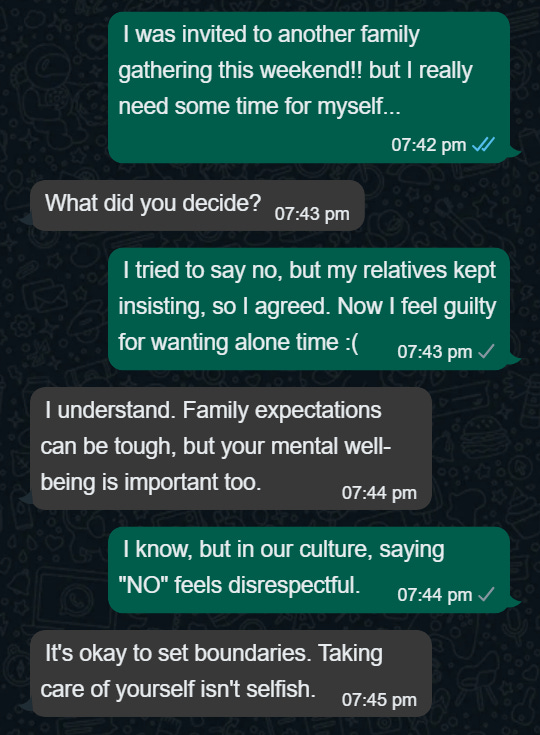
I vented about agreeing to attend a family gathering when I really needed some downtime at home. This conversation made me realize how often I've prioritised others' needs over my own without setting clear boundaries. Whether it's feeling obligated to answer work messages after hours or agreeing to activities I don't enjoy to avoid conflict with my partner. All these times, I have neglected my own well-being.
It's become clear to me: learning to set healthy boundaries is crucial in both personal and professional life.
Still unsure? Here's a question for you:
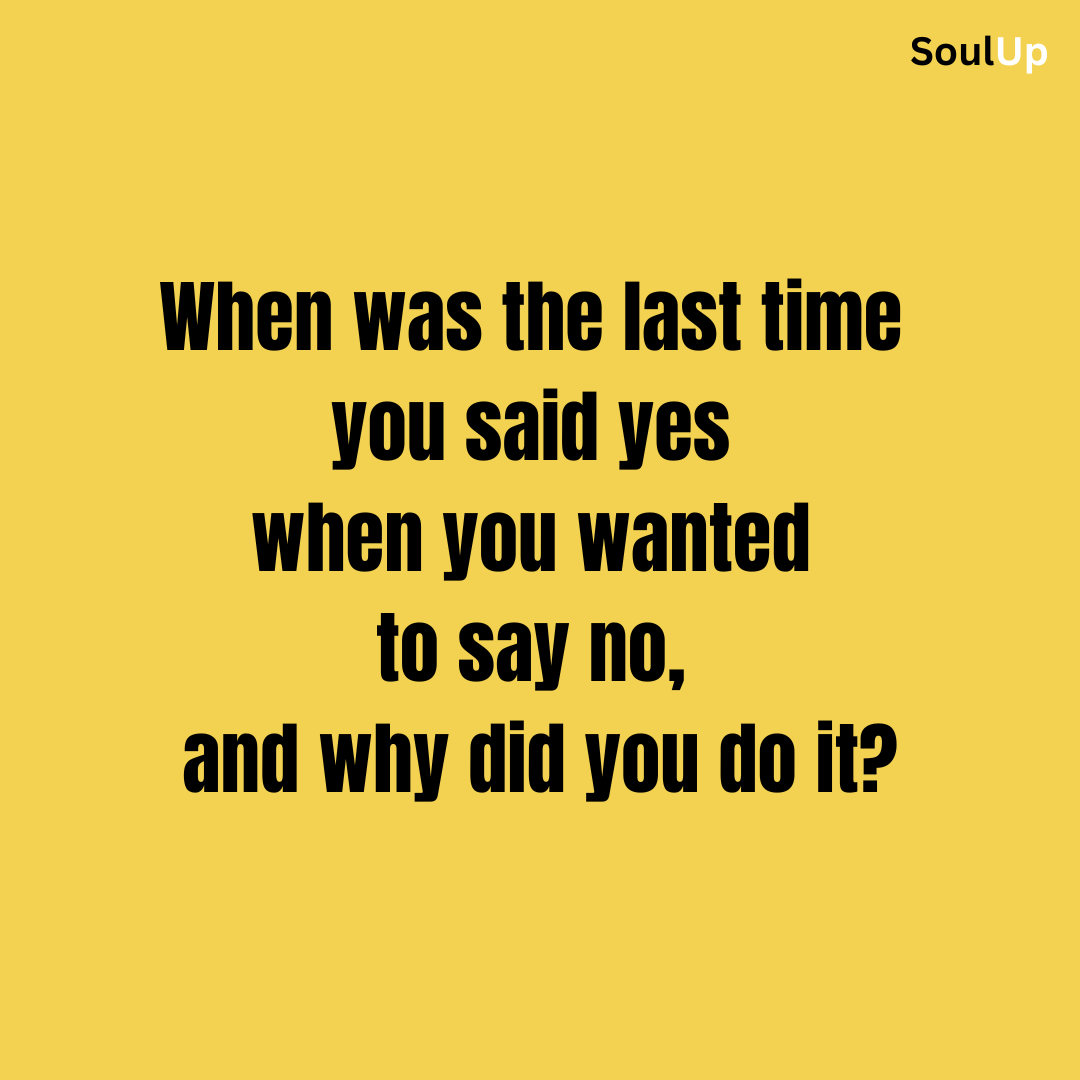
Setting boundaries might sound difficult, but it's essential for our well-being. Here’s why they matter and how they can change your life:
Protect Your Well-being: Imagine a life where you’re constantly overworked and stressed. Boundaries help you say "no" to extra demands, giving you the space to rest and recharge.
Improve Relationships: When you set clear limits, others understand your needs better. This mutual respect leads to healthier, more fulfilling relationships.
Boost Your Confidence: Saying "no" when you need to reinforces your self-worth. You start feeling more in control and confident in your decisions.
Prevent Resentment: By clearly stating your limits, you avoid feeling taken advantage of, reducing resentment and frustration.
Maintain Balance: They help you find a healthy balance between work, relationships, and personal time, making life more manageable.
Ensure Fairness: Setting boundaries ensures that interactions remain fair and respectful, both personally and professionally.
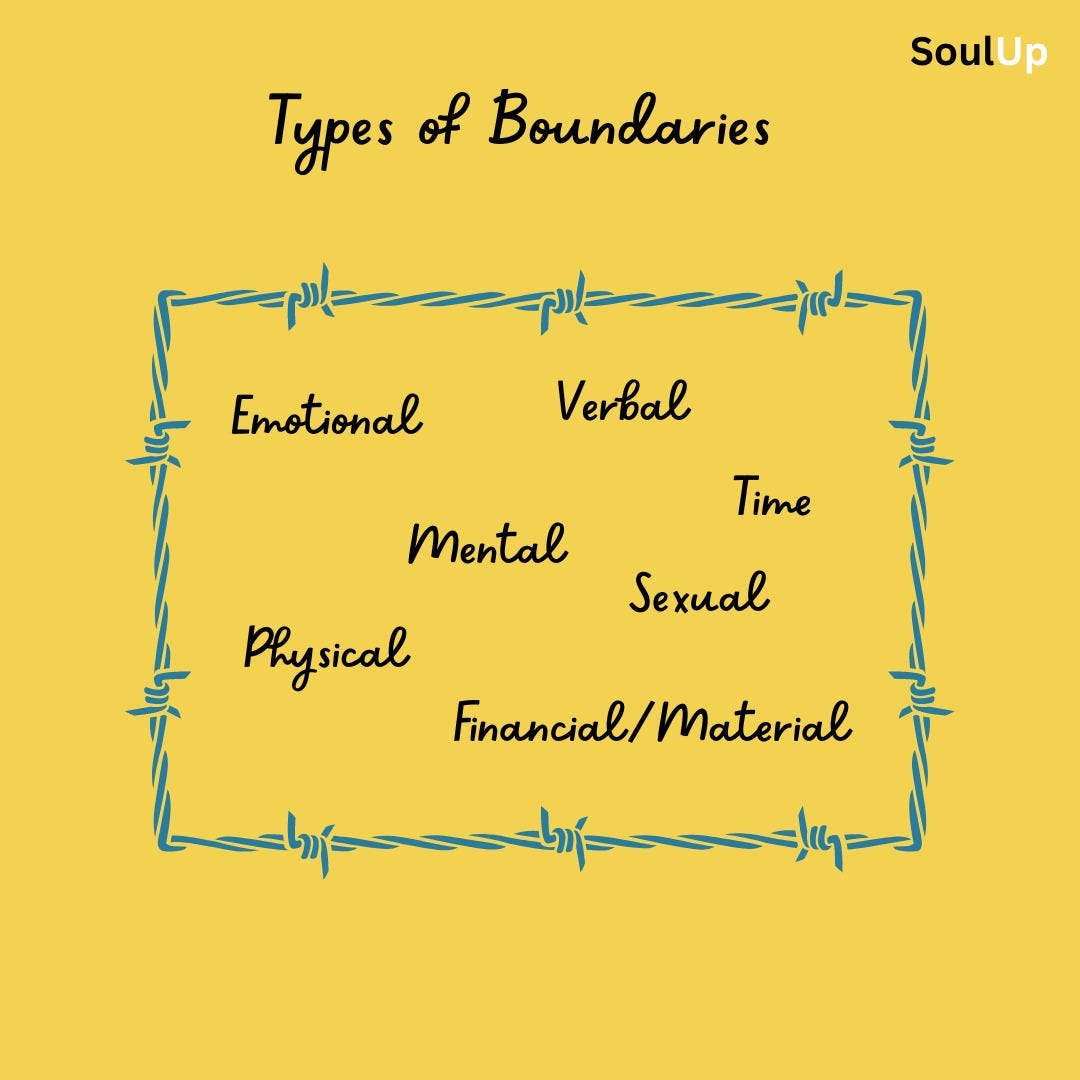
But the question rises, how to do I set these boundaries? Here are some practical steps:
Know Your Limits: Understand what you need and what makes you uncomfortable. Your feelings are valid.
Be Clear and Direct: Communicate your boundaries honestly and assertively.
Start Small: Practice setting boundaries in easier situations before tackling more challenging ones.
Stay Self-Aware: Pay attention to your emotions and physical responses to recognize when your boundaries are being crossed.

Ready to take charge?
Join our group ‘Learn to Set Healthy Boundaries’ to develop skills on setting, communicating and enforcing boundaries.
One can’t ignore the ‘inward’ journey.
Many of us carry an aspiration to be spiritual or find some form of spirituality as a path to lasting joy and emotional well-being.
Here is what we found when we surveyed our 650+ strong Peer community:
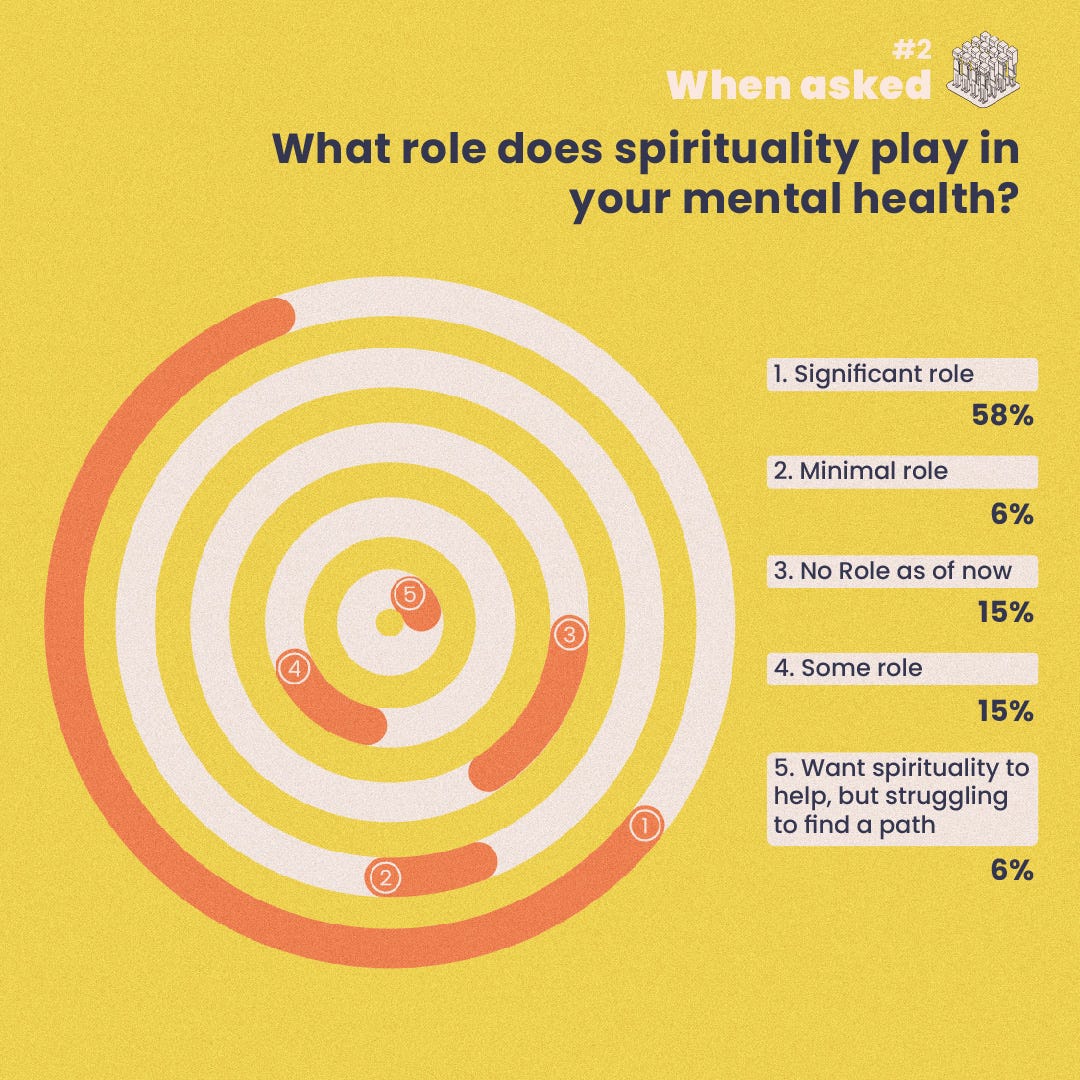
Currently, SoulUp offers 2 groups that can help you with build self-awareness and answer some larger questions that we ask when we face life’s relentless challenges:
Practical Bhagwad Gita: A 12 session introduction to the high-level terrain and key concept of the Gita | Starts 17th July.
Spirituality in Daily Life: A 4 session group to help you practice basic spiritual principles in your daily life.
Its high time! Building emotional support for patients
Over the past several years of the startup boom - it’s been crazy to see interesting solutions around healthcare come up - at a pace that it’s impossible to keep track of what is happening.
However, one thing that a lot of our healthcare system has consistently failed to do - is to account for and build for the emotional impact of any healthcare problem.
Dealing with a chronic illness or even going for a major procedure can be emotionally daunting and can take a huge toll on a person’s life. Imagine dealing with -
Parkinson’s as a young mom
Or a skin condition which impacts your self-image
Or unforgiving chronic pain
Or worse - As a caregiver, see a loved one suffer
So while our health-care systems provide for physical care, there need to be pathways for patients to deal with the emotional burden of disease.
Building emotional support for patients has been one of our core focus areas.
SoulUp currently has 150+ Peers who have been caregivers for or lived with epilepsy, multiple sclerosis, sciatica etc. to those dealing with infertility, relapsed cancer or even rare conditions.
We also run support groups for patients every month - some specific to a condition and others where the practical needs of finding love, career stress etc. are discussed for those who are patients.
The emotional support side of healthcare is widely underserved and hence uncharted - always looking for thoughts and inputs here!
Self-assessment time. Ahem!
Half-suspect you may be a workaholic? Take this test to see if you are addicted to work.

Want to get involved or know more about what we do at SoulUp? Ping us on WhatsApp!
Explore SoulUp: Support Groups | 1-on-1 Peer Calls | Therapy
Great